How Dental Assisting Students Learn Infection Control Step by Step
If you have been thinking about a career in dental assisting, learning infection control is one of the first and most important skills you will build. I see it every day at Dental Careers Institute. Students gain confidence when they understand how to protect patients, their team, and themselves.
If you want to learn dental assisting the right way, I would love to talk with you. You can reach my team at 770-973-0496 or visit mydentalcareers.com/contact.
Why Infection Control Matters in Dental Assisting
Infection control is the foundation of safe dental care. Dental assistants work closely with patients and instruments, so proper procedures help reduce the risk of cross contamination in the dental office.
According to the Centers for Disease Control and Prevention, dental health care personnel must follow standard precautions for every patient. These guidelines help protect everyone involved in care (Source: CDC).
This is why infection control is taught step by step, not rushed, and practiced daily in training.
Step 1: Understanding How Infections Spread
Dental assisting students start by learning the basics.
This includes:
- How bacteria and viruses spread
- What cross contamination means
- Why bloodborne pathogens are a concern
- How standard precautions apply to all patients
Once students understand the why, the how makes much more sense.
Step 2: Learning Proper Hand Hygiene
Hand hygiene is one of the simplest and most effective infection control practices.
Students practice:
- When to wash hands
- How long to wash hands
- When to use soap and water versus hand sanitizer
- How gloves fit into hand hygiene
These habits are built early because they are used all day in a dental office.
Step 3: Personal Protective Equipment Training
Dental assisting students learn how to correctly use personal protective equipment, often called PPE.
This includes:
- Gloves
- Masks
- Protective eyewear
- Gowns or lab jackets
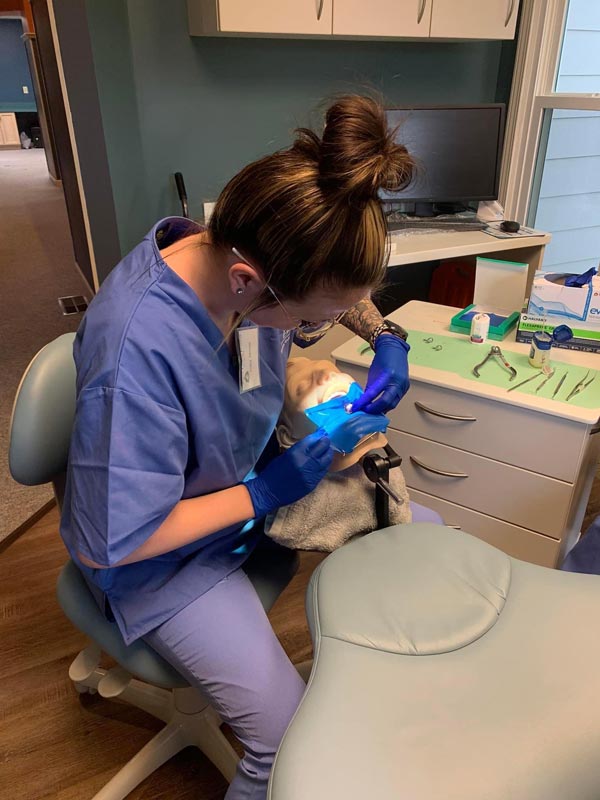
Students practice putting PPE on and removing it safely to reduce contamination.
Step 4: Instrument Cleaning and Sterilization
One of the most hands-on parts of infection control training is instrument processing.
Students learn how to:
- Clean instruments before sterilization
- Load and operate sterilization equipment
- Use chemical indicators and logs
- Store sterile instruments properly
This step helps students understand how critical attention to detail is in dental assisting.
Step 5: Operatory Cleaning and Disinfection
Dental assisting students also learn how to prepare and clean treatment rooms.
Training includes:
- Disinfecting surfaces between patients
- Using barriers correctly
- Following proper contact times for disinfectants
- Managing waste and sharps safely
These routines become second nature with practice.
Step 6: OSHA and Safety Guidelines
Infection control education includes workplace safety rules.
Students are introduced to:
- Bloodborne pathogen standards
- Exposure control plans
- Proper documentation and reporting
This knowledge helps prepare students for real dental office environments (Source: OSHA).
Step 7: Practice in a Clinical Setting
The final step is repetition and real-world practice.
In a training program, students apply infection control procedures during clinical exercises under supervision. This helps them build confidence and consistency before entering the field.
How Infection Control Prepares You for a Dental Assisting Career
Strong infection control training can prepare you for daily responsibilities in a dental office. Employers value dental assistants who understand safety protocols and follow them carefully.
This training may help you qualify for entry level dental assisting roles and feel comfortable on day one.
My Advice to Future Dental Assistants
Take infection control seriously from the start. It is not just a requirement. It is a professional mindset. The habits you build in school can stay with you throughout your career.
If you have been thinking about a future in dental assisting, I would love to help you take the first step. You can reach my team at 770-973-0496 or visit mydentalcareers.com/contact-us/.
References
- Centers for Disease Control and Prevention. Infection Control in Dental Settings. https://www.cdc.gov
- Occupational Safety and Health Administration. Bloodborne Pathogens Standards. https://www.osha.gov